
Is Mackerel Healthy? What to Know Before You Serve It


A beautiful tin of hot-smoked mackerel can turn a few crackers, a lemon, and a spoonful of crème fraîche into a table worth lingering over. But is mackerel healthy as well as delicious? For most people, it can be a very nourishing choice, thanks to its protein and beneficial fats. The fuller answer depends on the species, how it is prepared, how often you eat it, and your own dietary needs.
Mackerel is not a food that needs disguising as a wellness trend. It is an oily fish with a naturally rich flavor, a long place in coastal cooking, and a useful nutritional profile. Treat it as a considered pantry staple rather than a cure-all, and it earns its place in everyday lunches and smart, generous entertaining.
Why mackerel has a healthy reputation
Mackerel is an oily fish, meaning it contains more fat than lean white fish such as cod. That is not a drawback. Much of that fat includes omega-3 fatty acids, the polyunsaturated fats associated with normal heart function as part of a balanced diet. Oily fish is also a valuable source of protein, which helps make a light meal feel properly satisfying.
It can contribute several other nutrients too, including vitamin D, vitamin B12, selenium, and iodine, although the exact amounts vary by species, portion, season, and preparation. Vitamin D is particularly worth mentioning in northern climates, where many people get limited sun exposure for part of the year. Fish can be one of the dietary sources, though it should not be viewed as a substitute for individualized medical advice or supplements recommended by a clinician.
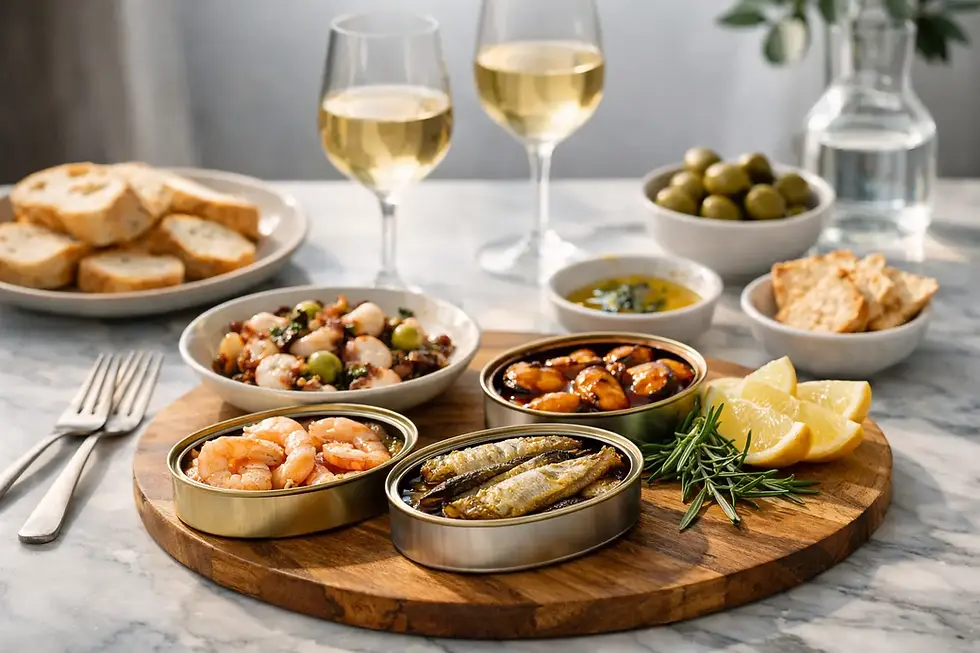
The appeal is practical as well as nutritional. A shelf-stable tin gives you a ready-to-serve fish course without a last-minute trip to the fish counter. Kept unopened according to its label, it is there for a quick lunch, an aperitif board, or the fastest impressive thing you can put on a table when friends arrive.
Is hot-smoked mackerel healthy?
Hot-smoking gives mackerel its deep color, tender texture, and savory, woodsy character. It also changes the nutritional conversation slightly. Smoking is a preservation and flavoring method, but smoked fish may contain more sodium than fresh fish because salt is often part of the process. For many people, that is simply something to balance across the day. For anyone managing high blood pressure, kidney disease, or a sodium-restricted diet, the nutrition panel and serving size matter more.
A useful habit is to compare labels rather than assuming all smoked mackerel is alike. Check the salt or sodium amount per serving, the ingredients, and whether oil or a sauce has been added. Oil-packed fish can be wonderfully lush on a seacuterie board, but it may provide more calories than fish packed more simply. Neither format is automatically better - it depends on the meal you are building and what else is on the plate.
Traditional hot-smoking is also about pleasure. Its richness means a modest portion can feel generous when paired with sharp, fresh accompaniments. Think cucumber ribbons, radishes, pickled onions, peppery leaves, rye crackers, or a bright squeeze of lemon. These pairings add crunch and acidity while allowing the mackerel to remain the centerpiece.
The mercury question: species matters
“Mackerel” covers several fish species, and this is where broad health claims become unhelpful. Mercury levels are not the same across every type of mackerel. In US seafood guidance, Atlantic mackerel is generally a lower-mercury choice, while king mackerel is among the types people who are pregnant, breastfeeding, or feeding young children are advised to avoid because it can contain higher mercury levels.
The sensible approach is to read the label and identify the species where it is listed. If you are pregnant, trying to become pregnant, breastfeeding, or choosing fish for a child, follow current guidance from your healthcare professional and relevant public health authority. Variety is useful for everyone: rotate oily fish with other seafood and protein choices rather than relying on one item every day.
This is not a reason to fear tinned fish. It is a reason to buy with a little knowledge. Good food decisions are usually made through patterns, not perfection.
How often should you eat mackerel?
For many adults, including oily fish in meals regularly can fit comfortably within a balanced diet. A commonly used benchmark is two portions of fish a week, including one portion of oily fish, though individual advice can differ. Mackerel is especially useful when you want something more substantial than a snack but do not want to cook from scratch.
Portion size is flexible. A tin can be shared across a board with bread, vegetables, cheese, and fruit, or used as the protein in a simple lunch. Flake it through warm potatoes with dill and mustard, fold it into a grain salad with herbs, or spoon it onto toast with sliced tomato and a little horseradish. The goal is not to make every meal virtuous. It is to make good ingredients easy to enjoy often enough.
Make the rest of the plate work harder
Because mackerel is rich, it shines with contrast. For a weekday lunch, serve it with a pile of dressed leaves, beans, and a piece of good bread. For guests, build a seacuterie board around it: crisp crackers, oatcakes, pickles, apple slices, soft cheese, capers, and something creamy for balance.
If whisky is part of the occasion, keep the pour modest and make the food the focus. A lightly peated or coastal-style whisky can echo the smoke in the fish, while lemon and pickles keep the pairing lively. Those watching alcohol intake can create the same sense of occasion with sparkling water, a citrus cordial, or a chilled herbal tea.
Arran Gourmet’s hot-smoked mackerel is designed for this kind of easy ceremony: Scottish character in a shelf-stable tin, ready when the table needs a little more flavor and story.
A few situations that call for extra care
Mackerel is not the right choice for everyone, every time. Anyone with a fish allergy should avoid it. People advised to follow a low-sodium diet should assess smoked products carefully, and those with gout or conditions affected by purine intake may need personalized guidance on oily fish portions. If you take medication or have a condition that affects your diet, a doctor or registered dietitian can give advice tailored to you.
Food safety still matters with tinned seafood. Store unopened tins in a cool, dry place, check the best-before date, and do not use a damaged, leaking, or badly swollen tin. Once opened, refrigerate leftovers in a suitable container and use them promptly according to the product guidance.
The healthy choice is the one you will enjoy
Mackerel offers protein, omega-3 fats, and real depth of flavor in a format that asks very little of you. Its trade-offs are equally straightforward: know the species, keep an eye on sodium in smoked versions, and enjoy it as part of a varied diet.
That leaves plenty of room for the good part - opening a tin, arranging a few thoughtful accompaniments, and sharing a small taste of Scotland that feels both effortless and special.

Comments